We’re Not Numbers — We’re the Line Between Packages and People
You’re right to be angry — and you’re not alone. Too many Flex drivers feel like cogs in a machine that counts scans and zones but refuses to count the real-world problems we face on every block. When a delivery goes wrong, the training and algorithms shift the blame straight onto us, even when the cause is clearly beyond our control: bad addresses, locked buildings, unreachable customers, sudden road closures, or warehouse mistakes. That’s dehumanizing — and it’s operationally shortsighted.
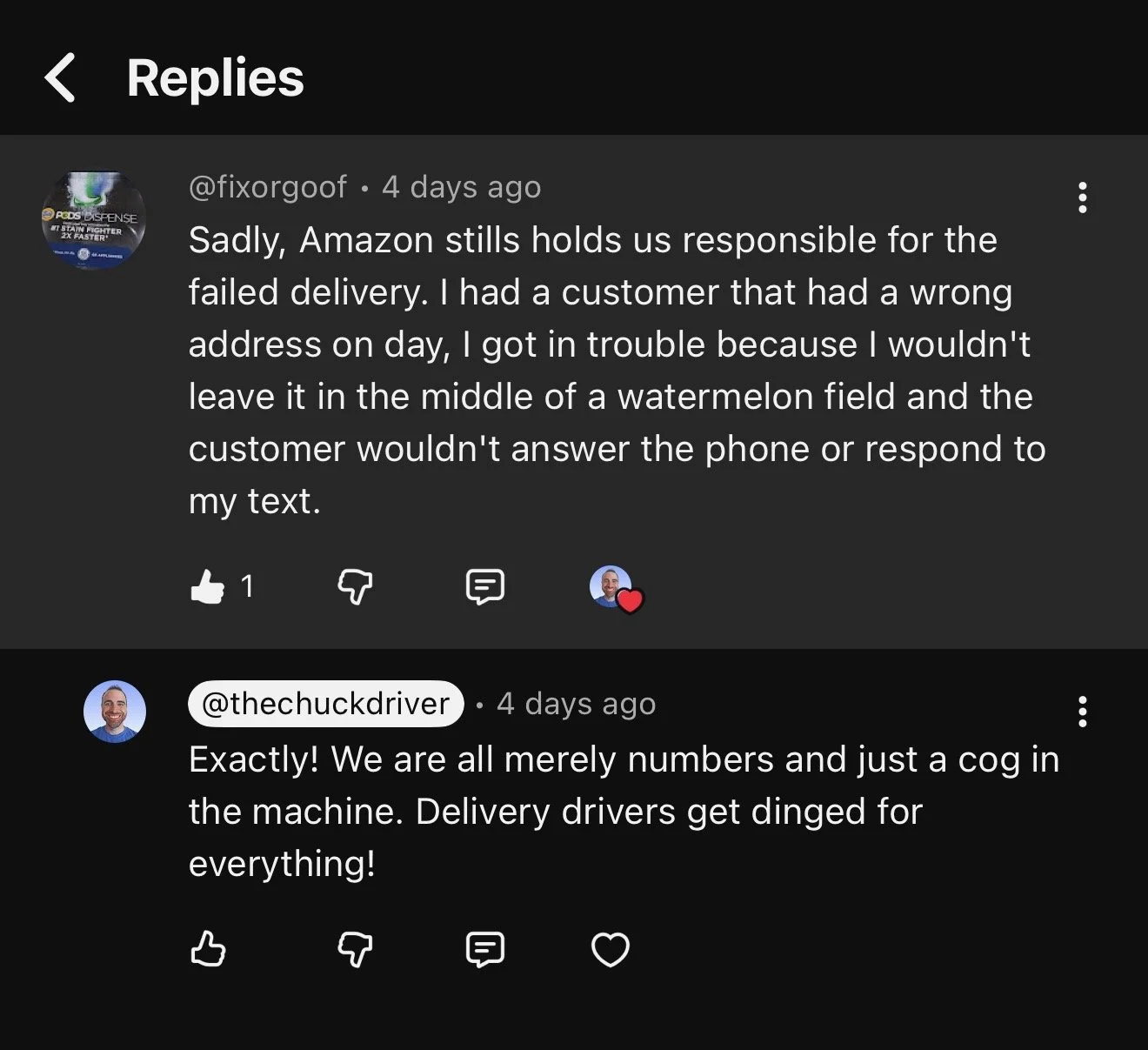
What happened in that watermelon-field case
• The situation: a package routed to the wrong address; the driver refused to abandon the parcel in an unsafe or obviously incorrect location; customer non-responsive.
• The result: driver gets penalized for a failed delivery despite acting responsibly.
• Why it’s wrong: responsibility should follow causation. If the address data is wrong or the customer is unreachable, assessing the driver as the primary fault is unfair and undermines safety and service quality.
Three systemic problems this highlights
1. Algorithms over context — Performance metrics treat completion rate as a simple number, ignoring legitimate exceptions or safety-based judgment calls.
2. No built-in contingency credit — There’s little to no automatic allowance for variables like incorrect addresses, apartment access policies, or customer non-responsiveness.
3. Burdensome documentation expectations — When drivers are penalized, proving the issue can be time-consuming and inconsistent, leaving drivers vulnerable.
Practical steps drivers can take (short-term defenses)
• Document everything immediately: photos of the area, screenshots of the delivery address on your app, timestamps, and any call/text logs. Take a clear photo showing why the address is wrong (e.g., “watermelon field” or missing house numbers).
• Record call attempts and keep copies of texts. If a customer’s phone goes straight to voicemail, note that and the time.
• If you contact Dispatch or Support, note the agent’s name and case number. Ask for escalation or a ticket number and keep it.
• Appeal promptly and politely: include your photos, timestamps, and a short factual narrative. Concise, objective evidence helps internal reviewers.
• Use the “safety first” defense when applicable — many review teams will respect refusal to leave a package in an unsafe or inappropriate spot if clearly documented.
What Amazon (and platforms like it) should change (policy-level fixes)
• Create automatic exception flags: when the delivery address is demonstrably incorrect or unreachable, the system should mark the block as “data/recipient issue” rather than driver fault.
• Improve verification: if a route has multiple failed attempts or obvious address mismatches, escalate to human review before docking drivers.
• Better support workflow: quicker, transparent case resolution and clearer guidance when drivers face situations beyond their control.
• Allow safe refusal without penalty: if leaving a package would be unsafe or obviously wrong, drivers must be able to mark it as undeliverable without punishment.
A final note to drivers
You’re not a number — you’re the face of last-mile logistics. Protect yourself by documenting, following the app’s procedures, and appealing when penalized. Share clear, factual evidence and push for case escalation when needed. Organize your experiences with fellow drivers (safely and professionally): repeated examples make a stronger case for systemic change.
You handled the watermelon-field situation the right way — you prioritized safety and common sense. The system should be fixed so commonsense decisions aren’t turned into penalties.