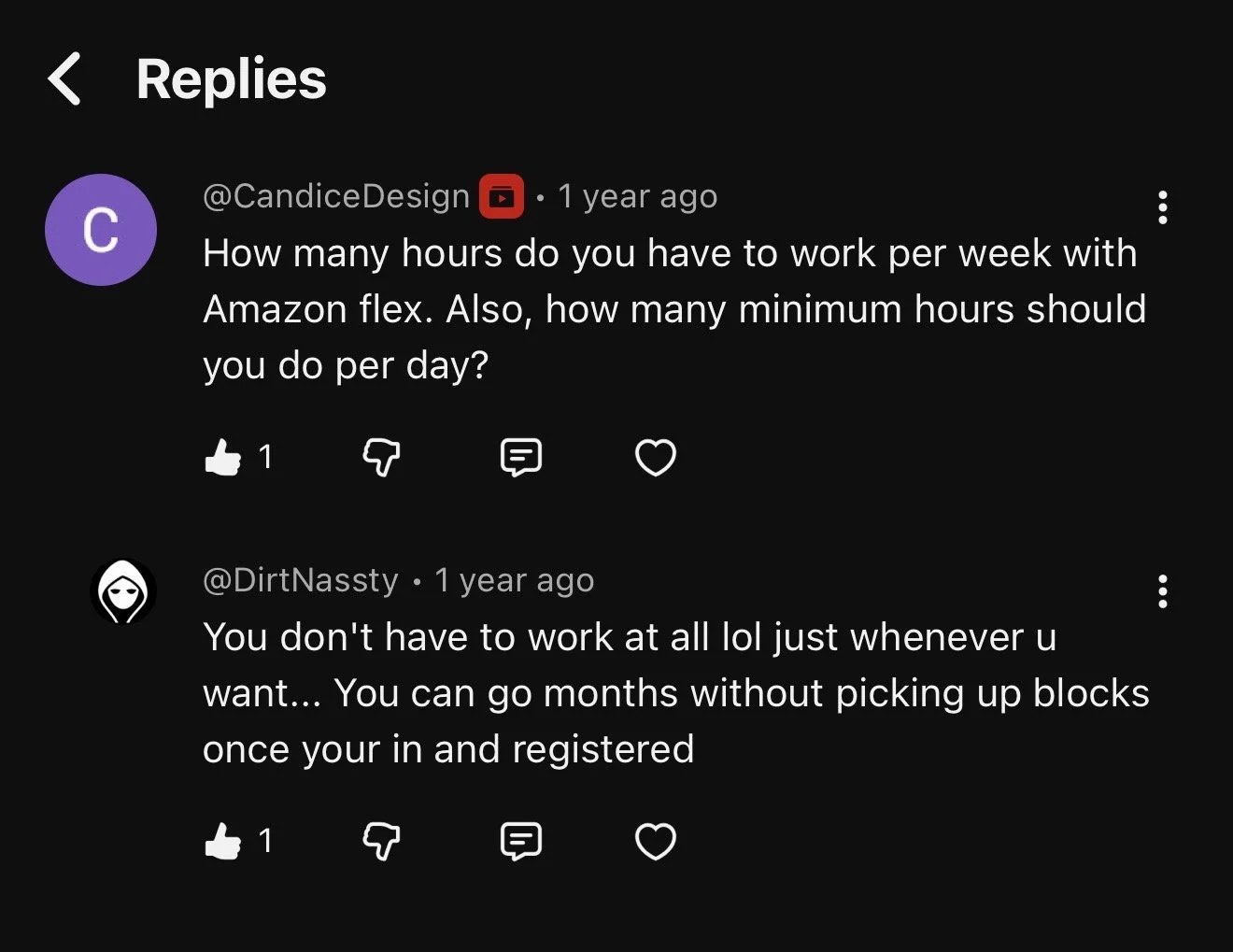
One of the most common questions from new Amazon Flex drivers is: How many hours do you have to work each week? Many people also want to know whether there is a minimum number of hours they must work each day.
The short answer is simple: Amazon Flex generally allows you to choose when you want to work.
Is There a Weekly Hour Requirement?
Unlike a traditional job, Amazon Flex does not typically require drivers to work a set number of hours each week. You can choose available delivery blocks through the app based on your schedule.
That means you may work:
• Several blocks in one week
• Only occasionally
• No blocks for a period of time
• Whenever your personal schedule allows
Some Flex drivers may even go months without accepting a block after becoming registered and remaining eligible to use the platform.
Is There a Minimum Number of Hours Per Day?
There is generally no required minimum number of hours you must work each day. You are not expected to clock in for a full shift or meet a daily schedule.
Instead, you select individual delivery blocks. These blocks can vary in length, availability, and location. Blocks are usually two to five hours in length depending on your local warehouse. And blocks can start as early as 3am each day.
You can accept a block when it fits your plans and skip it when it does not.
Work When It Fits Your Schedule
The flexibility is one of the main reasons people become Amazon Flex drivers. You can use the opportunity to:
• Earn extra income after work
• Deliver on weekends
• Work during free evenings
• Take time off without requesting approval
• Adjust your schedule from week to week
For example, you might deliver three days one week and take the next week off completely. Your availability is largely up to you, although block availability can vary by location and seasonal demand.
Several factors can affect how many hours an Amazon Flex driver can work:
• Local customer demand: Higher package volume can mean more delivery blocks; quieter periods may mean fewer.
• Season and special events: The holiday season and other high-volume periods can bring more delivery opportunities. In some markets, the hours cap may also be raised temporarily—but that isn’t guaranteed.
• Local delivery-station needs: Opportunities vary by area and station. Amazon says it offers Flex opportunities in locations with customer demand, and that work availability can change.
• How many drivers are available: Even when demand is strong, blocks may be limited if enough drivers are available to cover them. The number of blocks shown in the app depends on what’s offered in your area.
• Your recent hours and applicable cap: A rolling limit can affect whether you’re eligible to accept another block. It doesn’t necessarily reset at the start of a traditional Sunday-to-Saturday workweek; check the app for your current availability.
• Account and block eligibility: Available offers may depend on the block type, location, and any requirements shown in the app.
In short: More hours usually depend on both available delivery work and whether you’re below the hours limit currently applied to your account. Your Flex app is the best place to confirm what you can book, but may not specifically tell you when you can work extra. So check local Amazon Flex driver groups on Facebook or other community forums. Drivers often share information about current rates, working hours, and warehouse conditions.
A Flexible Option for Independent Drivers
Amazon Flex can be a convenient option for people who want delivery work without a fixed weekly schedule. You do not generally have to commit to a specific number of hours per week or per day.
The key point is this: You can accept blocks when you want to work and skip them when you do not.