Why Drivers Say “No” to Multi‑Stops
You’re heading home late, your stomach is rumbling, and you realize a quick detour for some food would hit the spot. Or maybe you need to drop a friend off on your way home. It seems simple enough: you open your rideshare app, tap "Add a Stop," and assume your driver won't mind. To you, it's a minor adjustment. To me, however, it feels like a major financial red flag.
Why is there such a massive gap between passenger convenience and driver reality?
And What Passengers Can Do About It
I hardly accept multi‑stop trips. It’s not personal — it’s math and experience.
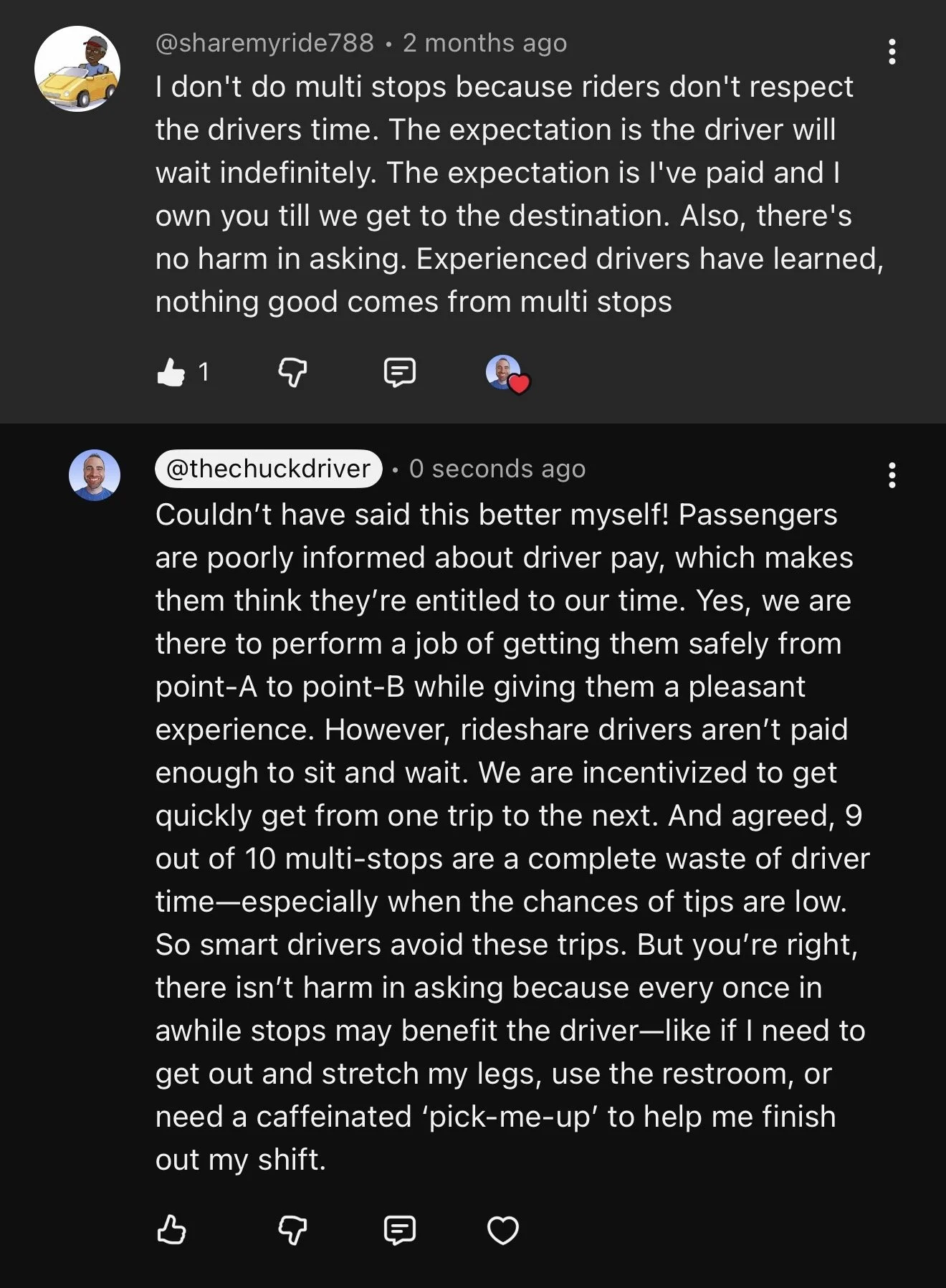
Rideshare passengers often assume that paying for a ride buys unlimited access to a driver’s time. That belief comes from not knowing how drivers are paid and from a reasonable—but misleading—intuition: if I paid, the driver should just wait. In reality, drivers are running a small business under tight margins. We’re compensated for moving passengers, not for parking and waiting. Every minute spent idling is a minute we can’t use to pick up the next paying fare.
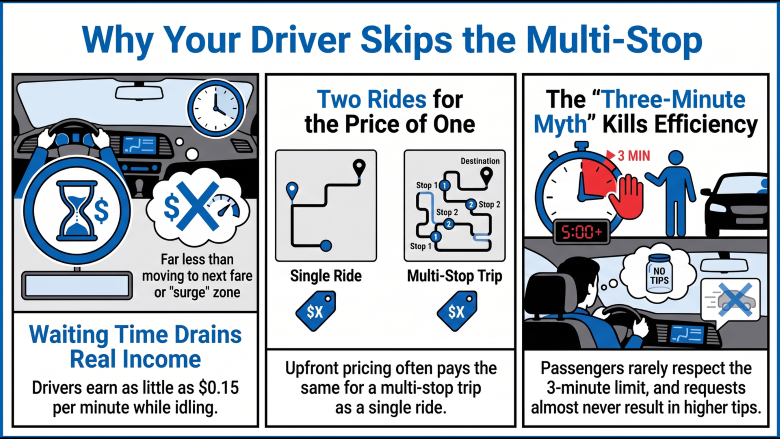
Why multi‑stops are expensive for drivers
Drivers are compensated for movement, not for parking and waiting. When my wheels aren't turning, I am actively losing money. This financial reality is driven by three major pain points:
The Wait-Time Pay Gap: Rideshare platforms compensate drivers an incredibly low rate for wait times—typically around 15 cents per minute. That amounts to a mere $9.00 an hour before taxes, gas, and vehicle wear, which is far below minimum wage.
Incentive Hurdles: Drivers heavily rely on completing consecutive trips quickly to hit hourly goals, quest bonuses, or to catch high-value "banger surges" during peak hours. A single drawn-out stop can shatter that hourly momentum.
Low Tipping Probability: In my experience, and the experience of almost every veteran on the road, the vast majority of multi-stop rides do not result in higher or meaningful tips, making the extra time and effort a losing bet.
Why experienced drivers avoid them
From experience, nine out of ten multi‑stop requests don’t benefit the driver. Repeating delays, detours to low‑activity areas, or multiple quick errands rarely translate into extra pay or a meaningful tip. Over time drivers learn to say no to protect their earnings and time.
That said — ask nicely, there’s no harm in asking.
Being polite and transparent changes everything. Drivers will sometimes agree to wait or make a stop when:
• The stop is short and along the route.
• The passenger offers to pay for wait time with a clear tip.
• The driver personally benefits (stretching legs, restroom, quick coffee to keep going).
• The timing matches the driver’s schedule and traffic conditions.
Tips for passengers who need a stop or want a driver to wait
• Ask before booking, or immediately upon being picked up. Don’t assume yes.
• Offer to pay waiting time or an extra tip upfront. Clear compensation makes drivers more willing.
• Keep stops short and on the way. The less the detour, the easier the yes.
• Be transparent: say how long you expect to be and why.
Tips for drivers handling multi‑stop requests
• State your policy politely: “I don’t normally wait, but I can if you’re quick.”
• Suggest alternatives: pause the ride and request another pickup, or set a short wait fee via chat.
• If you accept, set clear expectations: how long you’ll wait and whether you expect compensation.
Bottom line
Passengers often mean well but don’t see the economics behind a driver’s choice. At its core, the multi-stop dilemma is a design flaw in rideshare platforms that pits passenger convenience directly against driver survival. Until platforms restructure their upfront pricing to pay drivers fairly for stops—perhaps by doubling minimum-fare stop rates or capping wait times strictly at three minutes—the burden of fairness falls on us.
Drivers aren’t being difficult — we’re protecting our livelihoods. A quick, polite ask plus fair compensation and clear expectations can make multi‑stops workable for everyone. By understanding the economic reality behind the wheel, passengers can replace frustration with empathy.
Next time you need an extra stop, ask yourself: Are you offering a fair exchange for your driver’s finite business hours, or are you expecting them to pause their livelihood for your convenience?